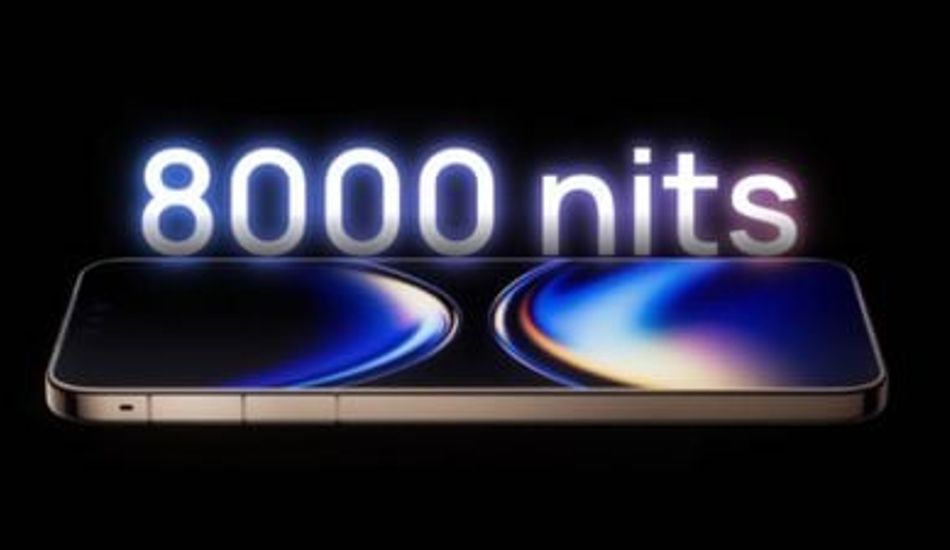
Huawei Mate 80 Series: Revolutionizing Displays with 8,000 Nits Brightness
Huawei's new Mate 80 series is making waves, especially due to its impressive display capabilities. The company is claiming that the OLED panels in these smartphones can reach a peak brightness of 8,000 nits. If this holds up in independent testing, it'd position the Mate 80 series as the brightest smartphones available.
What does this mean for you? Well, on paper, it’s a significant leap. All four models in the series – the Mate 80, Mate 80 Pro, Mate 80 Pro Max, and Mate 80 RS – are said to achieve this peak output. Interestingly, the Pro Max version uses a dual-layer OLED design to hit that 8,000-nit mark, while also improving efficiency and thermal management.
When you compare this to other leading phones, there's a noticeable difference. For instance, the latest iPhones reach around 3,000 nits peak outdoor brightness. However, you should be careful when comparing these numbers, since Huawei hasn’t specified the exact testing conditions for its 8,000-nit claim. Peak brightness can often refer to very brief bursts on small portions of the screen.
Real-World Considerations
It's important to remember that real-world visibility isn't solely about peak brightness. Factors such as viewing angle, reflectivity, contrast, and color accuracy also play a significant role. It’ll be interesting to see how the Mate 80 series performs in these areas.
Beyond the display, the Mate 80 series also boasts high-end camera systems with variable-aperture main sensors and multiple telephoto lenses. You also get RAM options up to 20GB on some models and large batteries, reaching up to 6,000 mAh, with fast charging capabilities.
The Mate 80 Pro Max starts at roughly $1,127, while the top-tier Mate 80 RS Master Edition goes for around $1,683. These prices definitely place them in the flagship category. Whether the impressive display and other features justify the cost is something you'll need to consider based on your needs.
1 Image of Huawei Mate 80:

Source: Mac Rumors